The problem
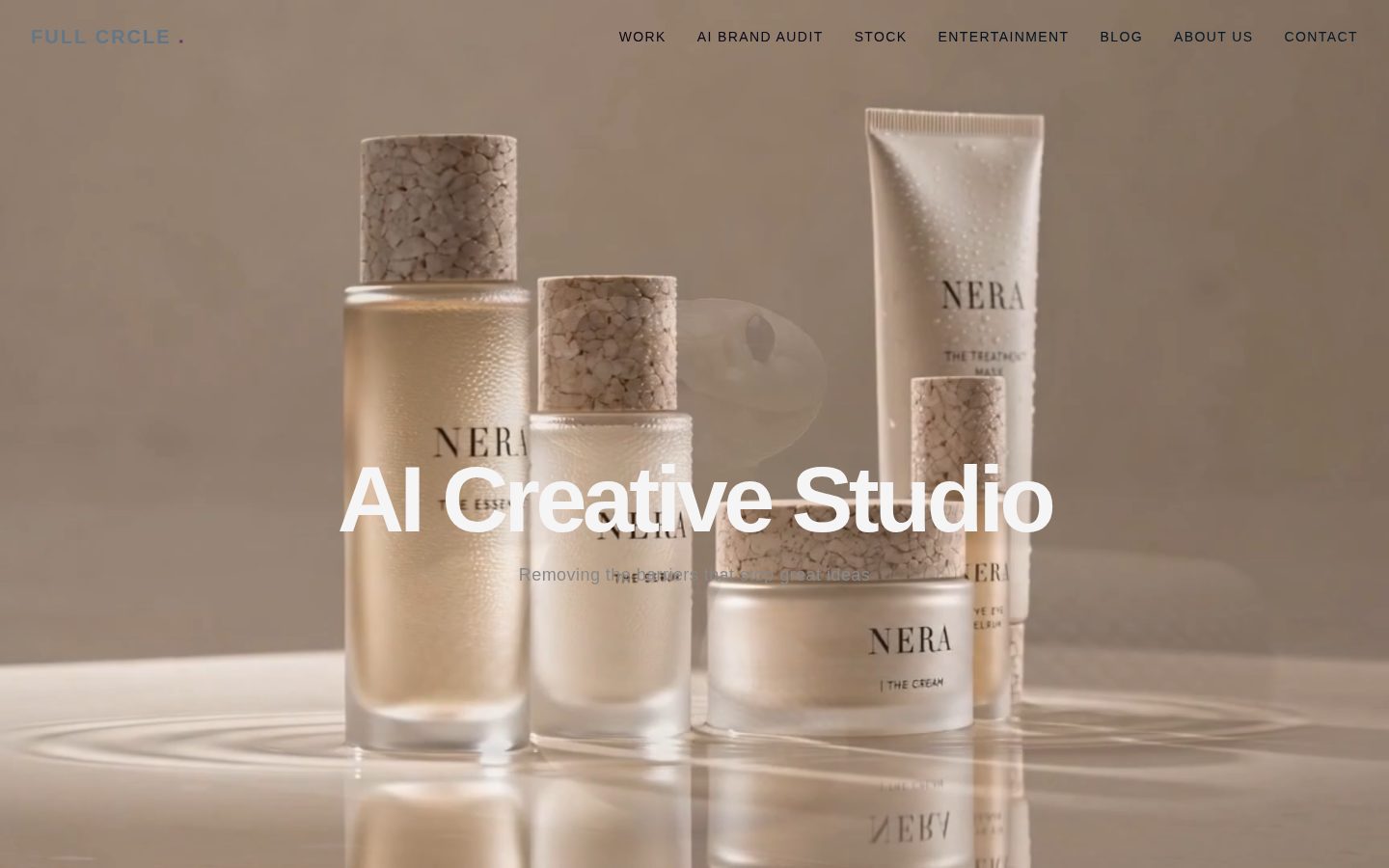
Campaign visuals usually mean a studio, a crew, locations and weeks of production, which most smaller brands can't commission. AI can produce striking images quickly, but the results tend to look generic, because nobody pinned down what the brand actually is before the prompting started.
The idea
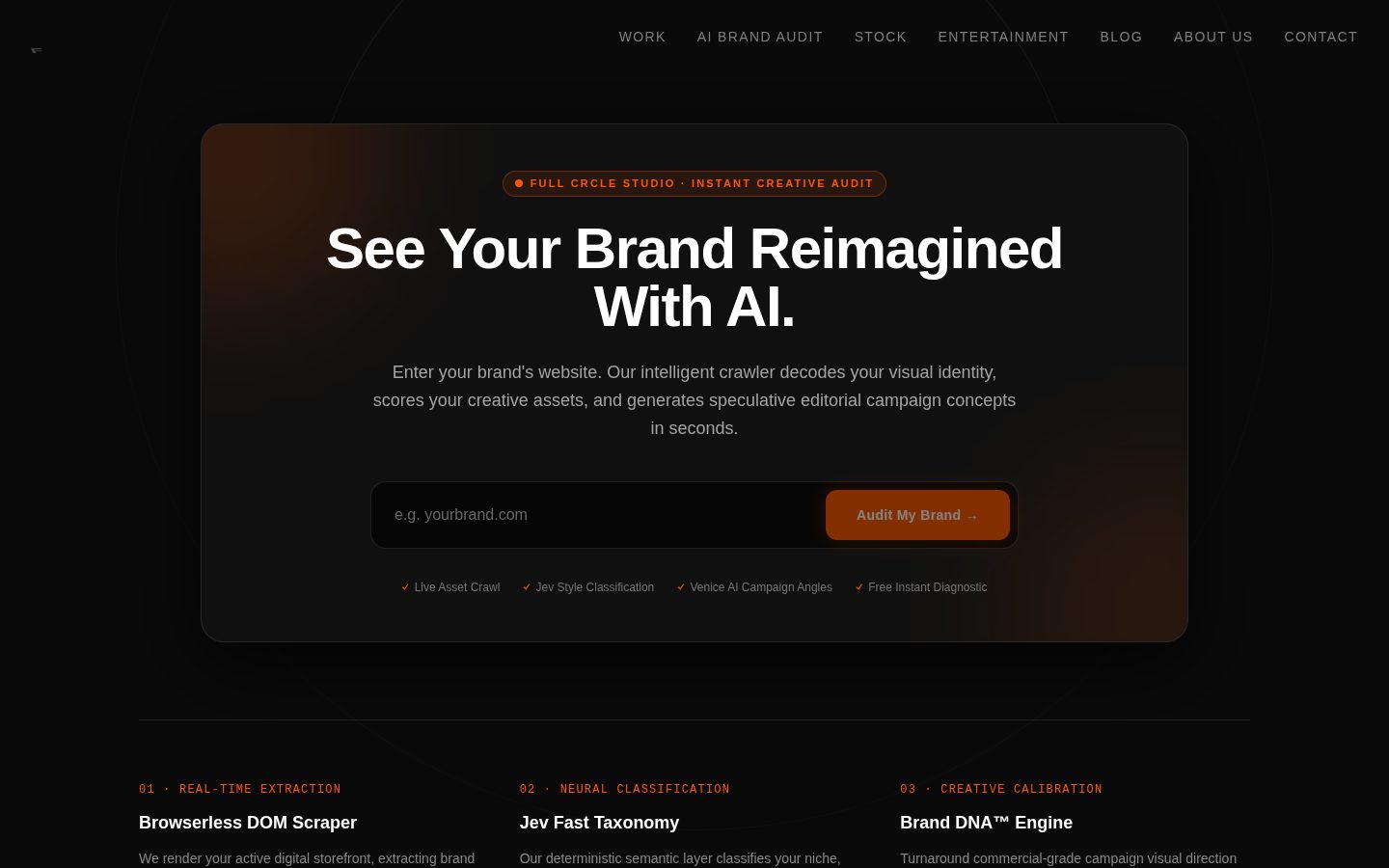
Full Crcle is a creative studio where AI does the production and people do the direction. Before any image is made, two tools do the thinking. The Brand DNA assessment captures the brand: its audience, voice, competitors, category conventions, hard exclusions and regulatory limits, plus a set of visual choices. The instant creative audit starts from nothing more than a website address.
How it's built
The site is a Next.js app with Payload CMS on PostgreSQL, so case studies, the stock library and the blog are edited without a deploy, and media lives in MinIO. The front end uses three.js, GSAP and Lenis for its cinematic motion, and the site keeps its own page-view analytics.
Brand DNA: structure before the model
The Brand DNA pipeline runs in three layers. First, deterministic scoring turns the answers into a profile across the brand's dimensions: the same answers always give the same scores, with no model involved. Second, Jev classifies and triages the profile. Only then does a private, no-log language model write the interpretation, and the result becomes a profile and a report deck. Each assessment runs on its own private link.

The instant creative audit
Enter a brand's website and the audit renders it in headless Chrome, falling back to a plain fetch, and pulls out the title, headings, copy and imagery. Jev classifies the sector and the visual gap, and the language model drafts a creative hook and campaign angles. If the brand wants the full audit, they leave their details and it becomes a lead.
Where it doesn't fit
The deterministic layer keeps the Brand DNA profile reproducible, but the creative interpretation on top isn't, which is why people direct the work rather than publishing whatever comes out. The audit only sees what a public website shows, so it's a starting point for a conversation, not a brand strategy. And AI imagery needs care that a normal shoot handles by default: likenesses, trademarks, and being clear with audiences about how the work was made.
What I took from it
The pattern is the same one I use in identity and AI governance: put deterministic structure and a judgment layer in front of the generative model, so the part that has to be right is reproducible and the model only does what it's good at.