The problem
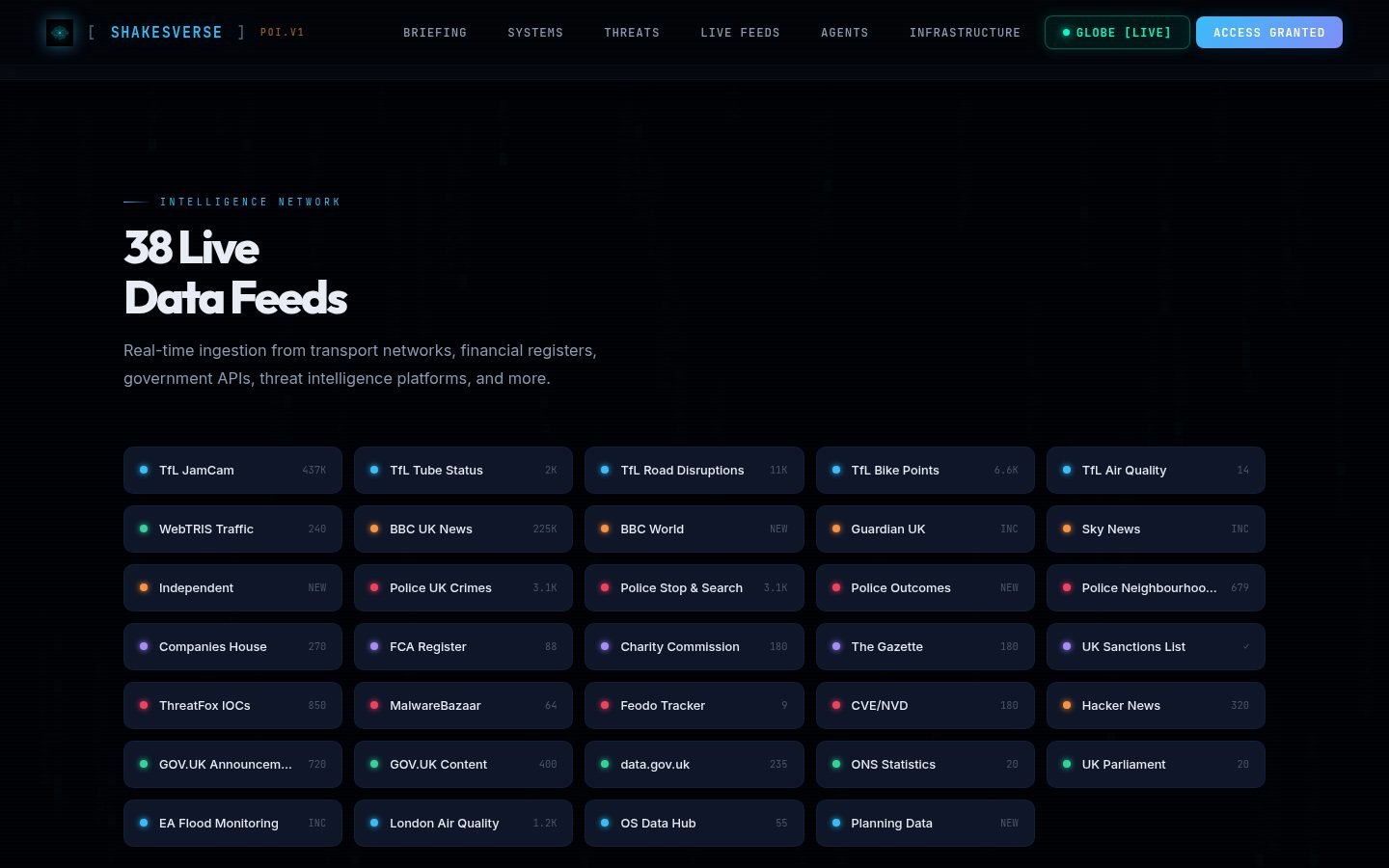
A lot of useful information is public but scattered: transport status and road disruptions, Companies House filings, the FCA register, the Gazette, police data, the sanctions list, and threat feeds such as ThreatFox and the CVE database. Analysts stitch it together by hand, and the tools that automate it tend to lose the part that matters most: where each fact came from, when, and whether it can be used.
The idea
ShakesVerse ingests lawful public sources on a schedule, keeps the provenance of every observation, and hands the analysis to specialist AI agents, each working in one domain. The consequential steps stay with people, above all deciding that two records describe the same person or organisation.
How it's built
It runs as a set of containers spread over several machines joined by a private Tailscale network. Python and Celery workers pull each source on its own schedule into PostgreSQL, with the source, time, confidence and legal basis recorded alongside each observation. Text is embedded with Hugging Face TEI into Qdrant, so analysts can search by meaning rather than keywords.
Ten agent roles cover news, threats, financial registers, documents, links between entities, geography, transport, crime data, OSINT scanning and social protection. Each runs as a pair for resilience, and a mission-control scheduler coordinates them. Prometheus, Loki and Grafana watch the whole estate.
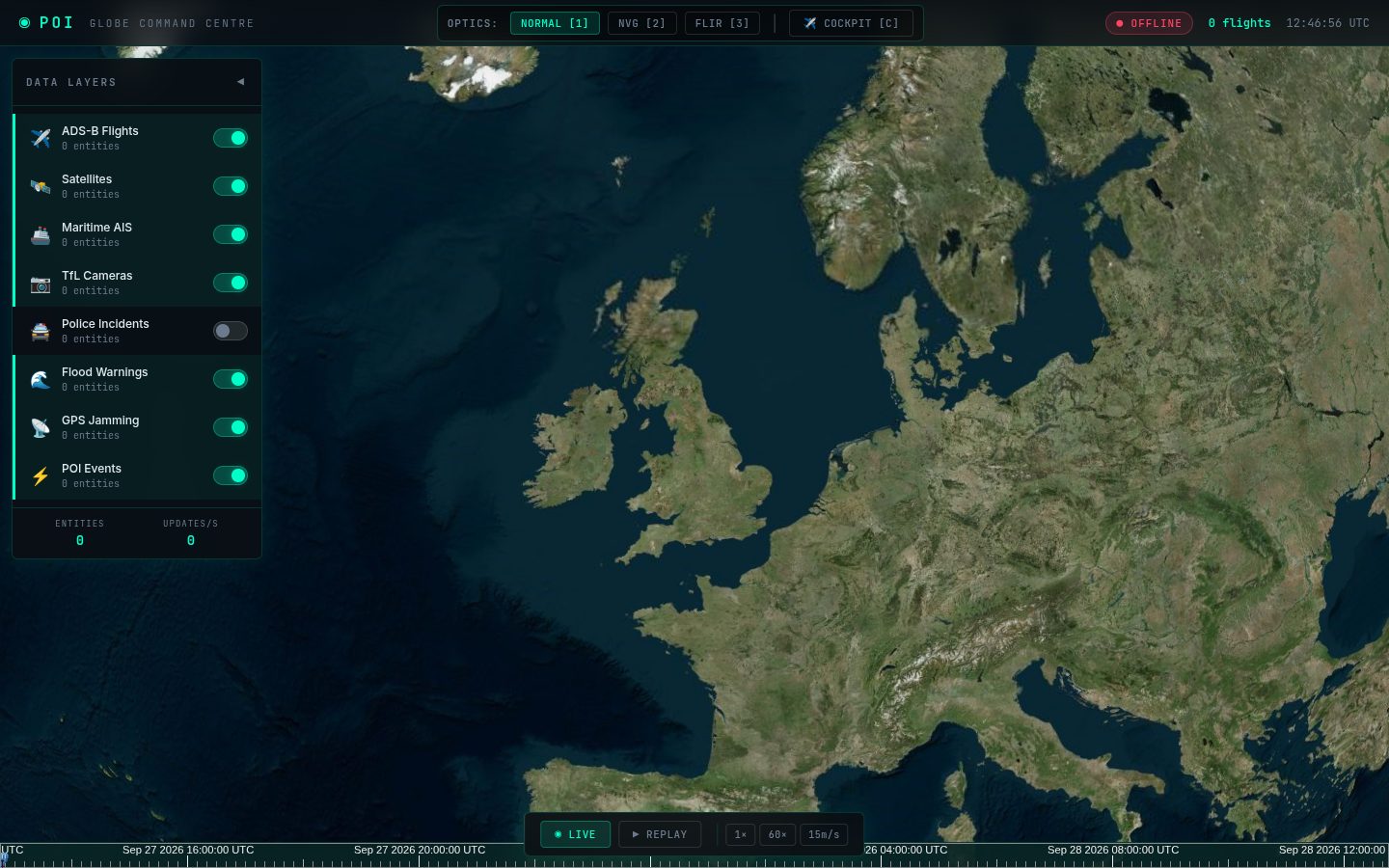
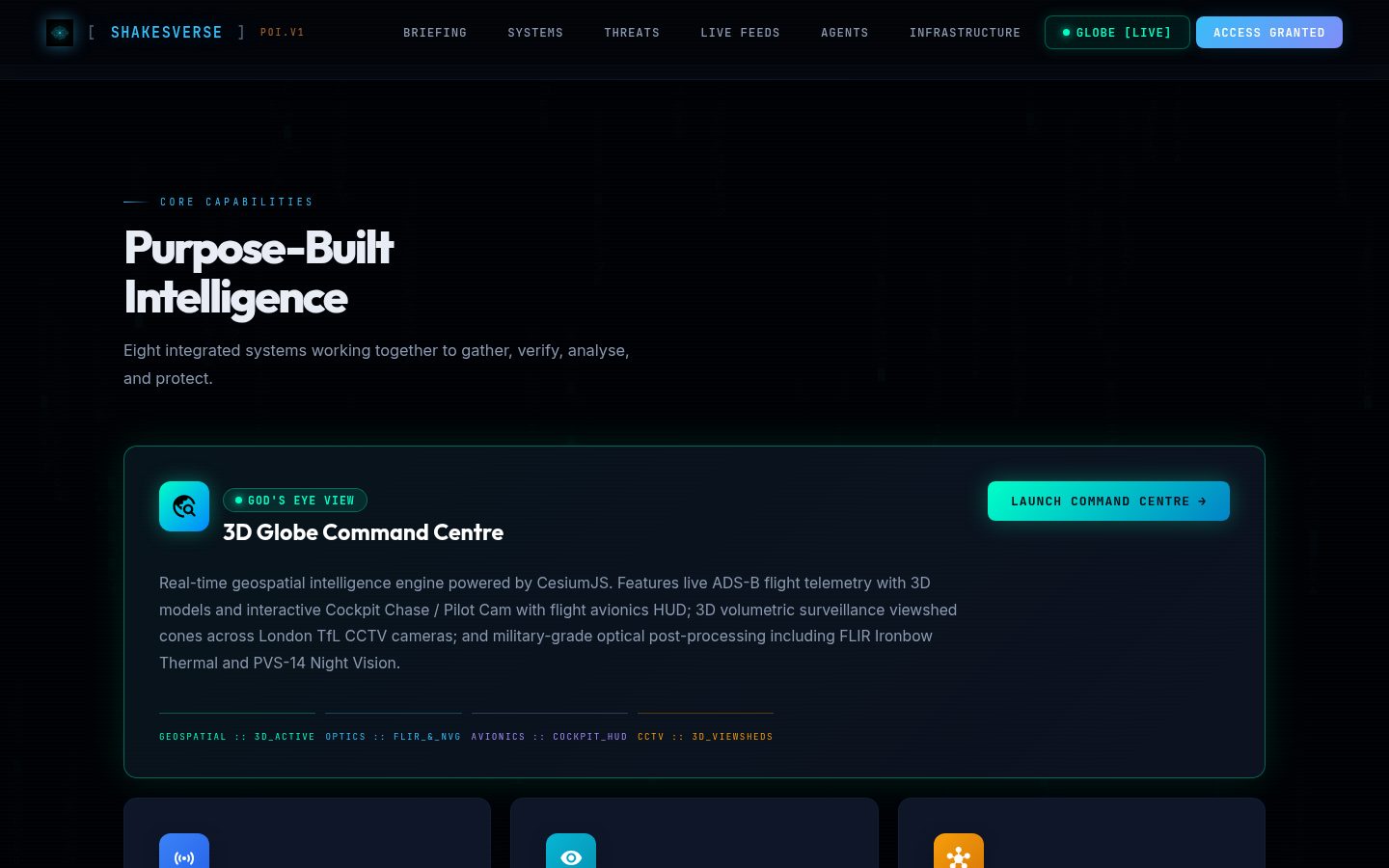
The globe, built on CesiumJS, puts flights (ADS-B), satellites, shipping, TfL traffic cameras, flood warnings and platform events on one map and timeline, with replay.
Identity resolution and evidence
Identity resolution suggests when two records might be the same person or organisation, with the reasons and a confidence score. Nothing is merged automatically: a reviewer decides, and the decision is kept with its evidence and chain of custody.
Evidence goes into a MinIO vault with a SHA-256 checksum and provenance metadata, so tampering is detectable and an analyst can show exactly what was captured, from where and when.
Where it doesn't fit
Open-source intelligence about people is powerful and easy to misuse. Public does not mean fair to use: UK GDPR still applies, which is why each source carries a recorded legal basis, access is by request rather than open sign-up, and matching is gated by a person. The camera and geospatial layers are for situational awareness, such as traffic, incidents and flooding, not for following individuals.
The agent fleet is paused at the moment while it isn't needed, so the daily briefings and agent analysis aren't running continuously, and the globe's live layers are quiet. And much of what makes the globe look impressive is visual: the real value is in the provenance and the review step, not the optics.
What I took from it
It's the same lesson as identity governance. The capability that should worry people, joining records about a person, is exactly where the human gate and the audit trail belong. Build the brakes before the engine.